2026 BULL SALE
Wednesday 5th August @ 1pm
at "Eastern Plains", Guyra, NSW
& online via AuctionsPlus
EMAIL US to request a 2026 Bull Sale Catalogue
Pre-sale Registration Form for Buyers
2026 BULL WALK
Wednesday 29 July
1.30pm to 3.30pm
at "Eastern Plains", Guyra, NSW
Please join us for a pre-sale inspection
of our Bull Sale Team

Bull selection is an important investment decision for your business. It can be the single, most powerful tool for genetic improvement in your herd.
Because each bull contributes half of the genetics to every calf he sires, the genetic influence of bulls introduced into your herd is persistent and multi-generational. It will shape the profitability of your herd for many years to come, especially if you're breeding your own replacement heifers.
So, what’s important in bull selection?
It's simple; PROFIT.
That is, select bulls who will produce more profitable progeny in your herd. To best achieve this, the bulls you select need to be a good fit for your program & well suited to your particular environment.
We urge you to look for OBJECTIVE INFORMATION describing the breeding functionality of bulls & the genetic potential they can pass onto their progeny, to reliably select those bulls best suited to your program & environment.
Above all else, it is OBJECTIVE INFORMATION which will enable you to make better informed, more reliable, more accurate breeding & bull selection decisions. In turn, this will drive PROFIT in your herd.
This is why we consider our pre-sale bull testing & assessment program to be integral to the success of your bull selection. It ensures independent, quantified, OBJECTIVE INFORMATION describing as accurately as possible the Fertility, Health Status, Temperament, Feet & Structure, Pedigree & Genetic Merit across the full range of production traits for our Bull Sale Team.
Our commitment to you; detail all this OBJECTIVE INFORMATION in our Bull Sale Catalogue so you have the tools you need at your fingertips to make better bull selection decisions for your operation.
What do we mean when we say OBJECTIVE INFORMATION? Please read on to find out.
(1) BULLCHECK™
What does it involve?
Scrotal circumference measurement in cm – to determine if above the minimum circumference according to age, weight & breed, plus a visual appraisal & palpation to assess scrotal body, shape & testicular tone, symmetry & evenness of testes, check for the presence of recognised conditions of the testes/scrotum.
Physical examination of the bull & reproductive tract - foot & leg conformation, gait, leg joints, head & jaw. Inspection & evaluation of the penis, prepuce & sheath for the presence of infections, warts or injury, assessment of sheath depth, umbilicus & preputial eversion, palpation of internal sex gland via rectal entry for irregularities & infections, assessment to ensure the penis can be extruded, examination of the penis in the extended position.
Sperm Motility
- A crush side test for sperm quantity & its ability to move forward. At only about 60µm long, sperm cells need to be motile to get the job done!
- Often referred to as a ‘crush side’ semen test, using electroejaculation, a semen sample is collected & examined ‘crush side’ to evaluate semen density, colour & motility (the % of individual sperm progressing forward). Our vet uses an ISperm to do this; digital technology using sperm recognition software with an iPad mini camera to determine the percentage of sperm motile, progressively motile & their associated velocities.
- A threshold guide for acceptable minimum Sperm Motility is >30% progressively motile sperm.
- However, only those bulls testing ≥50% progressively motile sperm in their semen sample make our Bull Sale Catalogue. Look for the BULLCHECK™ logo (see below) in our Bull Sale Catalogue to see Sperm Motility test results for each Lot.
Sperm Morphology
- We are one of a select few Angus studs who pre-sale test Sperm Morphology. Results for each bull are printed in the Lot Details in our Bull Sale Catalogue.
- Morphology of the sperm is the anatomy or structure of individual sperm cells.
- It is not the same as Sperm Motility & we urge buyers not to confuse the two.
- Sperm Morphology CANNOT be tested 'crush side'. It requires a large, expensive & specialised laboratory microscope to examine individual sperm in a preserved semen sample to assess the head, tail & mid-piece.
- At least 100 sperm are assessed in the preserved semen sample to determine the presence of normal & abnormal sperm.
- Abnormalities in the sperm are categorised according to the anatomical site of defects - ie whether the defect is present in the head, tail &/or mid-piece.
- Defects are further classed as compensable or non-compensable. Defects are considered compensable if they can be compensated for by increased sperm numbers. Non-compensable defects cannot be compensated for by the addition of more sperm because though these sperm can fertilize eggs, the eggs are not viable.
- Minimum ACV standards in Australia for Sperm Morphology are:-
- Compensable Defects - up to 30% of sperm in a semen sample with compensable defects is acceptable.
- Non-compensable Defects - up to 20% of sperm in a semen sample with non-compensable defects is acceptable.
- Normal Sperm - as well as the tolerance levels for sperm with compensable & non-compensable defects, a minimum requirement for the presence of normal sperm in a semen sample is set at:-
(i) >70% normal sperm for bulls used in single sire matings or AI
(ii) >50% normal sperm for bulls used in multiple sire matings
Why BULLCHECKTM?
- Because BULLCHECKTM is the 'gold card' standard for objectively assessing reproductive soundness & fertility in a bull.
- Developed by the Australian Cattle Veterinarians (ACV), it is specifically designed to evaluate bull fertility using a structured, science-based approach.
- BULLCHECKTM can only be conducted by a qualified veterinarian holding ACV accreditation. The methods & guidelines for vets to use when assessing bulls are clearly defined, according to published standards across set components (as discussed above).
- Results are transparent, consistent & comparable, no matter the breed or vendor.
- BULLCHECK™ will identify bulls with low fertility who may otherwise go undetected. A simple crush-side semen test alone can & does miss these bulls.
- Our 20 years of testing experience shows that while completely sterile bulls are rare, almost every draft will include a small number who repeatedly fail one or more of the BULLCHECKTM components. Whilst these bulls may not necessarily be sterile, it is accurate to describe them as having low fertility at the time of testing.
- In multiple-sire joining systems, low-fertility bulls can be difficult to identify, as more fertile bulls can compensate for them. This not only masks the issue but also increases the risk of injury to fertile bulls.
- Although some low fertility bulls can regain fertility over time, the timeframe it takes to do so is very often uncertain & indeterminate. But it comes at your considerable cost; a higher incidence of PTE females & more females joining up later in the breeding season. Better those low fertility bulls did not enter the bull sale ring in the first place.
Is BULLCHECKTM a fertility guarantee?
- No!
- It is impossible to do this because fertility in a bull will vary over time in response to a multitude of stressors over which you may have limited control.
- Most fertility issues develop during the joining period rather than being pre-existing problems.
- We urge buyers to be aware it is still important to check bulls regularly during the joining period for signs of lameness & evidence of penile or preputial swelling, even though they’ve passed their pre-sale BULLCHECKTM assessment.
How can you tell if a bull has been BULLCHECKTM tested?
- Simple - look for the logo (below) in a sale catalogue. In our Bull Sale Catalogue a summary of results appears beside each Lot.
- It is your quality assurance those bulls have passed a fertility assessment according to the highest of standards before stepping into the bull sale ring.
- It is a clear & unambiguous signal the vendor is committed to offering a draft of bulls who are reproductively sound & fertile at the point of sale.
- 2026 will be the 20th consecutive year, in which we offer Angus Bulls pre-sale tested according to BULLCHECK™ standards at our on-property Bull Sale. We're proud to be one of just a select few seedstock producers with such a record.
CLICK HERE for more in-depth detail about BULLCHECKTM (published by Australian Cattle Veterinarians).
(2) BEEF CLASS STRUCTURAL ASSESSMENT SYSTEM
Structural problems impact negatively on both the reproductive & growth performance in your beef herd. It is widely recognised that structural problems in bulls have detrimental effects on conception rates, calving patterns & thus profitability. Similarly, females with inadequate structural characteristics are more prone to weaning lighter calves or conceiving later in the breeding season than their more functional counterparts. These structural problems filter through the beef supply chain, reducing income & productivity for the producer, backgrounder, feedlot etc.
Prior to cataloguing, Eastern Plains Angus Sale Bulls have been independently assessed for structure by Liam Cardile, LRC Livestock, using the Beef Class Structural Assessment System. Liam provides 6 individual scores for front & rear claw set, front & rear feet angle, rear leg side & hind views + a sheath, temperament & muscle score. Bulls deemed inadequate have been culled from the sale draft & sold for slaughter.
Liam is an experienced assessor, & structurally assesses many leading seedstock herds in Australia of differing breeds. He is not involved in genetic marketing or specific breeding advice/consultancy, so there is no conflict of interest to influence his stock appraisal. The merit & integrity of the structural data provided by Liam & LRC Livestock is recognised throughout the seedstock industry as being truly & fully independent.
Look for raw Structural Scores along with those for Temperament & Muscle Score in the Lot details for each bull in our Bull Sale Catalogue.
Click here for more detailed info on the Beef Class Structural Assessment System.
(3) ESTIMATED BREEDING VALUES (EBV's) - THE FULL MONTY!!
EBVs are a reliable & accurate bull selection tool. We highly recommend buyers make good use of them in bull selection decisions.
You'll find the complete set of EBVs for each bull in his Lot Details in our Bull Sale Catalogue. There are 24; the FULL MONTY!
We urge buyers to be aware it is not uncommon for some EBVs to be omitted from sale catalogues. Docility & Structural EBVs; Claw Set, Foot Angle & Leg Angle, are oftentimes a case in point.
But without the full set of EBVs, you don’t have a clear picture of an Angus Bull’s genetic merit across the complete range of production traits — Calving Ease, Growth, Maternal, Fertility, Carcase, Feed Efficiency, Docility, & Structure.
Even the omission of just a few EBVs from a Bull Sale Catalogue limits your ability to make informed breeding & bull selection decisions. This can have lasting consequences for productivity & profitability in your herd.
Selection Indexes - we include all the economically relevant Selection Indexes in the Lot Details for each bull in our Bull Sale Catalogue - (a) Angus Breeding Index, (b) Domestic Index, (c) Heavy Grass Index & (d) Heavy Grain Index. We are one of just a select few Angus seedstock producers to include these 4 Selection Indexes in our Bull Sale Catalogue. In conjunction with EBVs, they will assist you in making more informed breeding & bull selection decisions.
We've been involved in formal performance recording of Angus cattle in Australia since its inception. Formerly this was through Angus BREEDPLAN, which is now known as the TransTasman Angus Cattle Evaluation (TACE); the genetic evaluation program adopted by Angus Australia for Angus & Angus influenced beef cattle.
Throughout this time, we've recorded extensive raw performance data, on a routine basis, across our entire stud Angus herd, from which EBVs are calculated.
What raw data do we record? Birth weight & date, calving ease scores, calf fates, multiple birth codes, 200D, 400D & 600D weights, scrotal size, ultrasound scan data for rib & rump fat, eye muscle area & IMF, AI dates, joining dates for natural mating programs, preg-test results, fate & disposal codes for females, mature cow weights, mature cow heights, mature cow body condition scores, coat type scores, docility scores & structural scores.
We are one of just a few Angus seedstock herds to record & report such comprehensive, high quality raw data to TACE.
Additionally, Genomics has been conducted for our entire Bull Sale Team, to provide Genomically Enhanced EBVs.
Our long held practice of consistent & extensive data recording, combined with Genomics, ensures EBVs for our Bull Sale Team have higher accuracies.
This means those EBVs more truly reflect the genetic merit of that bull & can more reliably predict the performance of his progeny. Ultimately, this supports more informed breeding decisions; both for our clients & for ourselves.
Look for TRAITS OBSERVED in the Lot Details of a bull sale catalogue to gauge how much raw data sits behind the EBVs for that Bull Sale Team. You may be surprised, or disappointed, to learn how little or how much raw data has actually been submitted for some drafts of sale bulls!!
CLICK HERE for more detailed info about TACE EBVs & Selection Indexes.
(4) PESTIVIRUS
All bulls catalogued for our Bull Sale have been ear notch tested negative for Pestivirus by Swans Veterinary Services, WA .
Pestivirus (also known as BVDV) commonly causes, but not limited to, abortion, reduced fertility, stunted calves + a period of immune suppression which can lead to calf scours, pneumonia and other diseases.
It is spread by contact with infected animals & especially Persistently Infected (PI) animals commonly called 'carrier' animals.
A PI bull, though it may exhibit no outward symptoms at all, present fat & sappy on sale day, & live a long & productive life, will shed & spread Pestivirus in all its’ bodily fluids all its’ life. It is worth noting, there have been EKKA Grand Champion winners that have later been verified Persistently Infected with Pestivirus!
Vaccinating a PI bull will not cure it, nor prevent it from spreading Pestivirus.
An ear notch test is the best means of identifying PI bulls. Minimise your Pestivirus risk by purchasing bulls that have been ear notch tested PI negative.
In addition to having been ear notch tested PI negative, all our sale bulls have been vaccinated with Pestigard™ which will protect the bull should it come into future contact with Pestivirus (which can commonly occur during transit). We recommend an annual booster vaccination program for your bull.
As a measure of best practice, we feel specific mention that bulls have been PI tested + vaccinated with Pestigard™, including vaccination dates, should be printed in every bull sale catalogue. Surprisingly, this is not a given (?). We urge buyers to make a point of looking for this information in a bull sale catalogue to avoid ambiguity & minimise the risks associated with Pestivirus.
In our Eastern Plains Angus Bull Sale Catalgue, you will find this information is printed on the HEALTH INFORMATION pages, as well as on the page displaying the BULL TESTING CERTIFICATION provided by our consulting veterinarian, Guyra District Veterinary Services.
(5) VETERINARY HEALTH
All bulls catalogued for our Bull Sale have received the following vaccinations & treatments:-
- Tick Fever trivalent (3 germ) vaccine
- Vibrovax
- Pestigard
- 7in1
- Bovi-Shield MH-One (single dose)
- Rhinogard IBR intra nasal spray
- treated with worm drench (Dectomax pour-on)
- Selovin LA
Please see the HEALTH INFORMATION page in our Bull Sale Catalogue for dates on which vaccinations & treatments were administered. This provides full disclosure of the vaccination status of our Bull Sale Team & also assists purchasers in maintaining a timely booster program for better vaccine efficacy.
As well, a National Cattle Health Declaration is provided to purchasers at delivery.
Pestivirus, Vibriosis, and Lepto can silently reduce your herd fertility. Inexplicably, it is not a given that sale bulls be vaccinated for these economically significant diseases.
We urge purchasers to manage these disease risks in their herds by purchasing bulls with a known & documented vaccination history.
(6) SIRE ASSURED
All bulls in our Bull Sale Catalogue are identified as SIRE ASSURED meaning the bull has been DNA verified to his Sire, denoted by the superscript SV at the end of this name. This provides buyers with peace of mind that the bull's sire is as printed in our Bull Sale Catalogue.
(7) JOHNES BEEF ASSURANCE SCORE
J-BAS8 - Eastern Plains Angus has a Johne's Beef Assurance Score 8. This is the highest level of assurance in Australia.
This means bull's are free to travel into all States.
We have been testing & monitoring for Bovine Johne's Disease since 1998 & are one of the original seedstock herds who have been part of the National scheme since this time. We continue our involvement under the guidance of Dr Leisa Brown, Guyra District Veterinary Services, who is accredited with Australian Cattle Veterinarians.
(8) EUROPEAN UNION ACCREDITATION SCHEME
Eastern Plains is an EU accredited herd.
(9) RECESSIVE GENETIC CONDITIONS
The genetic status for recessive genetic conditions AM, CA, NH & DD is identified in our Bull Sale Catalogue - look for "GENETIC STATUS:" in the Lot Details for each bull.
The genetic status for recessive genetic conditions is identified for animals as "Free", "Carrier", "Free Untested", "% Carrier" or "Affected" - eg DDF, DDC, DDFU, DD50%, DDA
For up-to-date & the most current information about recessive genetic conditions please visit Angus Australia.
See also the page RECESSIVE GENETIC CONDITIONS in our Bull Sale Catalogue.
We actively manage our stud herd for these conditions using DNA testing & pedigree information.
2026 Bull Sale - Reference Sires
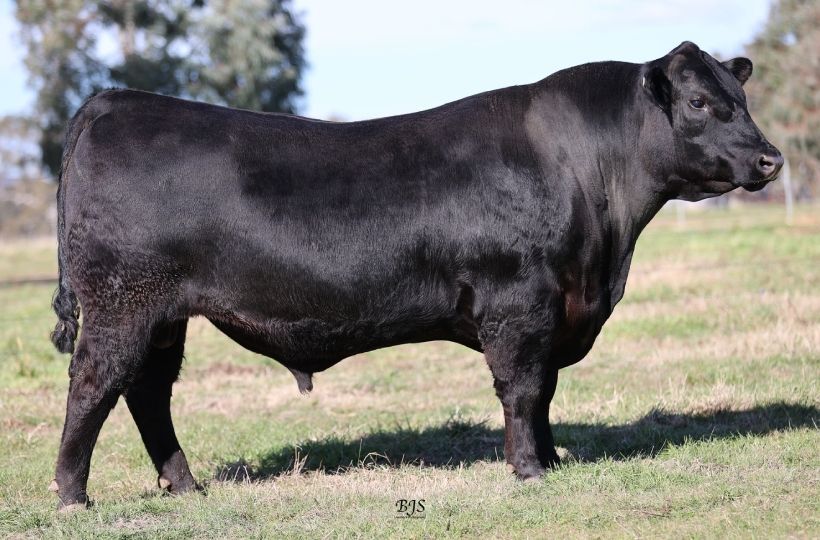
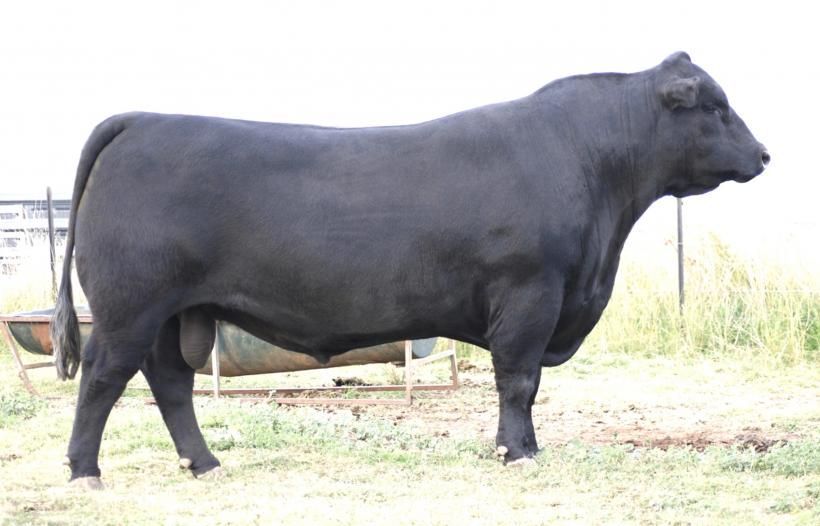
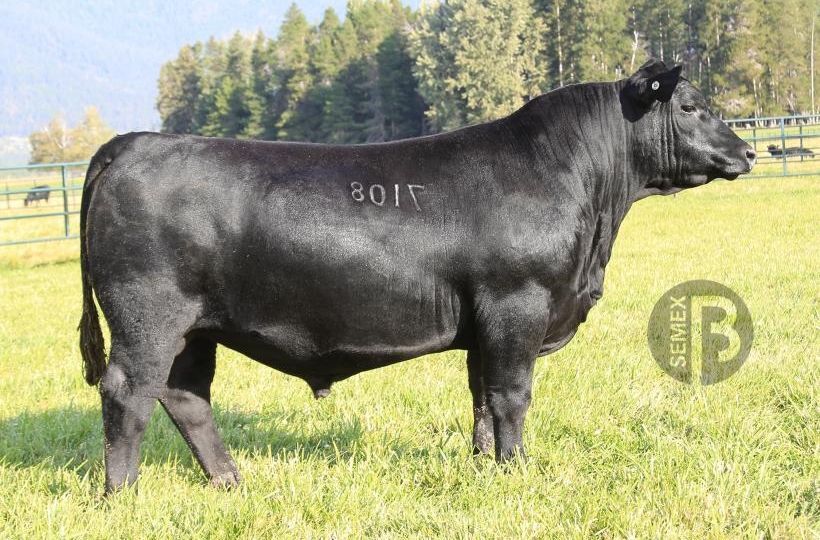
Our 2026 Eastern Plains Angus Bull Sale will feature sons of the following Angus Sires.
We take a 'team' approach when selecting sires to use in our program with consideration for both phenotype & genotype. Above all, we avoid selecting sires for their performance in one single trait, no matter how 'on trend' & popular that trait may be.
We reference & give particular emphasis to Estimated Breeding Values (EBV's) in our selection decisions when choosing sires for use in both our Stud & Commercial herds.
We look for sires with a balance of fertility, structural soundness, calving ease, growth & carcase traits. Whilst individual sires may be stronger or weaker in some traits compared to others, across the 'team' of sires, we try to maintain this balance. We select too, for moderation in these traits when choosing sires for use in our program.
Because we breed all our replacement females in both our stud & commercial herds, we are ever mindful that the heifers we breed, our future breeders, are the counterpart of producing high growth steers. Selecting sires to produce sound, low maintenance & fertile daughters is an important aspect of our sire selection decisions & stud program.


Firstly, we would advise to keep in mind that the bigger the change in environment - temperature, humidity & nutrition - the longer Angus bulls need to adapt. It’s important to allow for this period of adaptation, regardless of the breed of bulls being relocated.
The timing of our bull sale in early August should allow time enough for bulls to settle-in to their new homes ready for most Spring & Summer joining programs.
Cattle are mob animals with a social hierarchy. More pronounced in bulls, compared to females. This behaviour can be amplified at watering points in particular. Over time, bulls will establish their pecking order or group hierarchy & sort of learn how to live with each other to some extent. The pecking order thing will likely remain, especially when mustering & yarding.
Arrival:-
- If multiple bulls have been purchased, ensure the yards or paddock into which they'll be unloaded is large enough to allow bulls lower in the pecking order to physically distance themselves from more dominant bulls.
- It can be better to put bulls all together at once as introducing new bulls into a mob one at time stacks the odds against that new bull – preferably do so in a paddock rather than yards.
- If you've purchased a single bull, we do NOT recommend unloading him into yards or a paddock on his own, even for a short time. We’ve never exposed them to solitary situations having always run our bulls in sizeable mobs since birth. Bulls left on their own are much more likely to be unsettled & jump or push through fences. It is surprising how quickly this can become habitual behaviour which is then hard to stop.
- When unloading your bull into a set of yards or paddock, we recommend having some steers or non-cycling females in with them.
- Ensure access to clean water & good quality pasture or hay on arrival.
Joining:-
- After the first cycle, approx. two-thirds of females should be in calf. From then on, bulls can really start to fight & injure each other. In some multiple joining situations it may be prudent to remove some bulls from the joining team.
- Most bull fertility & soundness issues develop during the joining period rather than being pre-existing problems.
- It is still important to check bulls regularly during the joining period for signs of lameness & evidence of penile or preputial swelling, even though they’ve passed our comprehensive pre-sale assessments.
- If bulls with an active penile infection are detected (by their red & inflamed penis) it is best to isolate them from females & treat with antibiotics & anti-inflammatory medication - consult your local Vet for these. In some cases, penile infections can cause extensive swelling in the prepuce & the bull can look like he has a broken penis or sheath injury. But, if treated promptly, these bulls can & do regain normal function. The timing of treatment & sexual rest are key to this.
- Ideally, have a replacement bull ready.
Annual booster vaccinations:-
- Never underestimate their importance!
- That your bull/s is up-to-date with vaccinations on arrival does not make these any less important.
- We cannot stress enough; a timely booster vaccination program is integral to the breeding longevity of your bulls & your female herd.
- National Cattle Health Declaration – provided to buyers at delivery to help you maintain timely boosters for better efficacy. To avoid ambiguity regarding vaccination history, we strongly recommend buyers request these of all vendors.
- If you would like clarification about our pre-sale vaccination program please don't hesitate to contact Andrew White, 0477 359 057.
What about ticks & buffalo fly?
- Angus bulls/cattle have lower resistance to ticks & buffalo fly when compared to their Bos indicus & Bos indicus infused counterparts.
- We urge buyers to be very aware Angus bulls have the potential to rapidly lose weight & quickly die due to high tick & buffalo fly burdens. More so than locally bred cattle.
- Our Bull Sale Team has had no sustained exposure to buffalo fly.
- All Angus bulls reared outside the cattle tick line are naïve to cattle tick & have no natural resistance to ticks themselves. This includes our Bull Sale Team.
- Though our bulls have been vaccinated with Trivalent Tick Fever vaccine, they are at greater risk of significant anaemia & immunosuppression, not from tick fever, but from the effects of a tick infestation itself (ie from the effects of thousands of ticks consuming their blood).
- Be especially aware of need to closely monitor & manage tick burdens on vaccinated Angus bulls reared outside the tick line, once they’ve been relocated into a tick infested area.
- Check them regularly for both cattle tick & buffalo fly. Treat promptly as required!
NB - Trivalent Tick Fever vaccine only protects cattle from the 3 microscopic blood parasites, Babesia bovis, Babesia bigemina & Anaplasma marginale, that cause tick fever by destroying red blood cells. Trivalent Tick Fever vaccine does NOT protect cattle against the actual bite of the cattle tick, Rhipicephalus microplus. If vaccinated, tick-free cattle are relocated into a tick-infested area, they will have no natural resistance to ticks themselves. So there is a particular need to monitor & manage tick burdens on vaccinated cattle reared outside the tick line, once they’ve been relocated into a tick infested area.
The following resources may be of assistance in relocating your newly purchased Eastern Plains Angus Bulls:-
Tick Fever - TickBoss, QDPI, NSW DPI
Buffalo Fly - FlyBoss
Bovine Ephemeral Fever (3 day sickness) - QDPI & NSW DPI
Management Strategies for Relocation of Angus Bulls into Northern Australia
Guidelines for using Angus Bulls in QLD
Guidelines for using Angus Bulls in northern Western Australia
Bull Preparation & Presentation
What DO we do?
Ideally, we aim to present our 2 year old Angus bulls in a weight range of approx. 730kgs to 830kgs on Sale Day. They’re presented in ready-to-work, strong forward condition in order to withstand the rigours of adjusting to their new home environment & joining; all ahead of them after Sale Day.
Their physical functionality & agility is important if they're to do their job properly. We feel preparing Angus bulls to more moderate weights on Sale Day best enables them to do exactly this.
WEANING
- Our bulls are weaned onto improved pasture alongside their commercial contemporaries (steers & heifers) in March each year. They are NOT supplemented or grown out on fodder crops following weaning.
- We cannot see the benefit of producing Angus bulls who require weaning onto fodder crops &/or supplementary feeding in order for them to grow & mature.
- Bulls are run altogether in the one mob during the period following weaning in March until the start of our stud & commercial joining programs in September each year.
JOINING
- We use only our own stud bred yearling bulls in our commercial joining program & as back-up bulls in the stud.
- At the commencement of our joining period we select those yearling Angus bulls who will be used as part of our Spring joining program. These bulls receive no extra supplementation etc prior to their joining gig. They are literally selected from the mob one day & are put out with females the next.
- At the conclusion of joining, those bulls used in our joining program are then run together in the one mob. The remaining 'unused' bulls continue running together in another mob. They remain separated as we find the bulls fight & scrap if re-mobbed.
- These two separate mobs of bulls continue to graze improved pasture & are not supplemented or run on a summer grazing crop.
SALE PREPARATION
- Our bulls most definitely go through a sale preparation program!
- In a year with ‘normal’ seasonal conditions, supplementary feeding in readiness for sale day commences approx. 12 weeks out from Sale Day in mid-May.
- This entails feeding a dry feed pellet, initially on alternate days of the week. Intakes of dry feed pellets are gradually increased until the bulls are consuming a max of approx 1% of their bodyweight daily, reaching this level by late June or early July.
- Bulls are fed dry feed pellets each day rather than by self-feeders to better manage & limit intakes.
- Good quality lucerne hay is also made available to the bulls on an ad-lib basis during this period.
- However, 2026 is not a ‘normal’ season for us! Like many in northern NSW we're very dry & because of these conditions, commenced feeding lucerne hay to our Bull Sale Team mid-April & feed dry pellets at the start of May.
What DON'T we do?
We make the deliberate decision not to present bulls overly fat on sale day.
The negative effects of over feeding on a bull's fertility, long-term structural soundness & breeding longevity are well documented.
It is far more likely a draft of 2yo Angus bulls, averaging close to 900kgs with some weighing 1000+kgs on sale day, is due more to the abundant feed program they have enjoyed, rather than their "explosive growth" or that they are "easy doing".
It’s important to recognise that a bull with lower genetic merit for growth traits can out-weigh a bull who is genetically superior for growth traits when raised under high input systems with fodder crops & supplementation. However, a bull can only pass on his genetics to his progeny - not the feed program he enjoyed pre-sale.
The fat vs muscle thing can be deceptive. A bull can be poorly muscled but very well fed.
The team of bulls you see in front of you on sale day & their weights largely reflect they have done well under that vendor’s management program. Not that there is anything wrong with this. But be mindful, when those bulls need to work under true commercial conditions, without fodder crops & supplementation, they & very importantly their progeny may not similarly perform.
Excessive sale day weights hinder the ability of an Angus bull to adapt & cope with working in commercial environments; walking long distances to forage, water & serve females. Most will experience rapid & significant weight loss under true commercial conditions.
Quite apart from the direct effect of over feeding on fertility, this significant weight loss in itself can also have negative consequences for a bulls fertility from which they can often struggle to recover.
Our management & sale preparation program is about growing bulls more slowly & moderately, without the expense of continual supplementation & fodder crops. This style of management better prepares bulls for real-world commercial conditions. Our experience has been it benefits us all; you the buyer, us as the vendor, the bulls themselves & the females they're joined to.
Ultimately our business is about ANGUS GENETICS NOT A FEED PROGRAM!
What about bull presentation?
It is becoming increasingly commonplace for Angus bulls to be presented clipped & washed on Sale Day & in pre-sale photo’s & video. Sometimes it may be just the poll, ears, neck & tailhead clipped as often this is where hair can be the longer & coarser on an Angus bull.
But be aware that even partially clipping an Angus bull can make him appear as though he is naturally slick-coated & therefore seemingly more ‘heat tolerant’ than he truly is.
Once his coat has had a chance to re-grow, you may discover he is one of the hairier.
If an Angus bull is naturally more slick-coated, there should be little need for any clipping for this to be evident.
Keep in mind the natural Coat Type you observe on Sale Day largely reflects the environment those Angus bulls have been reared in. It does not necessarily mean they will similarly pass this trait onto their progeny.
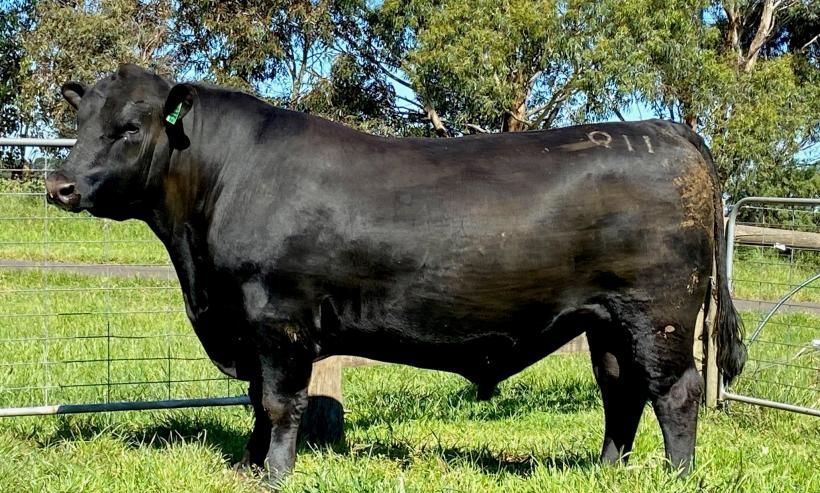
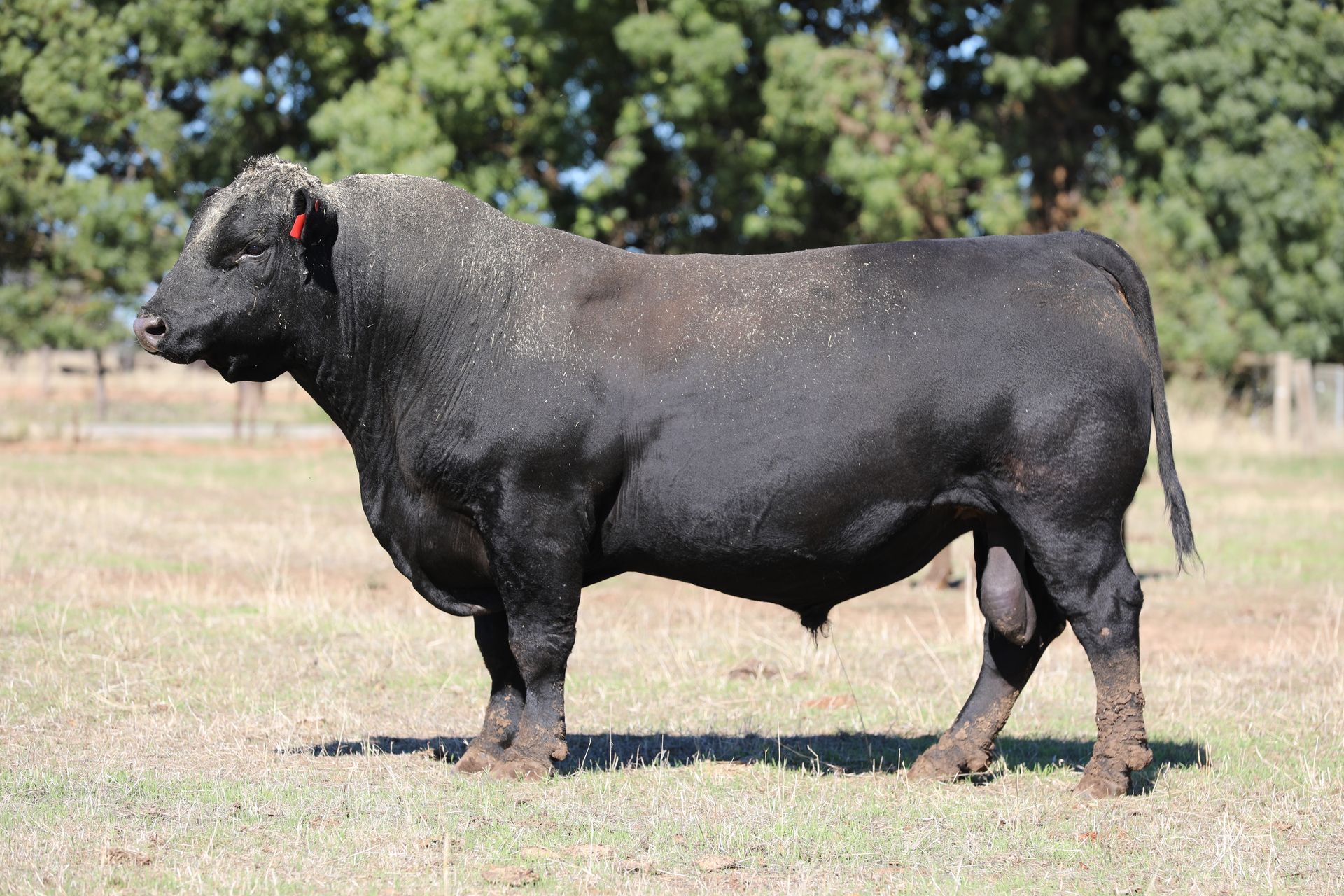
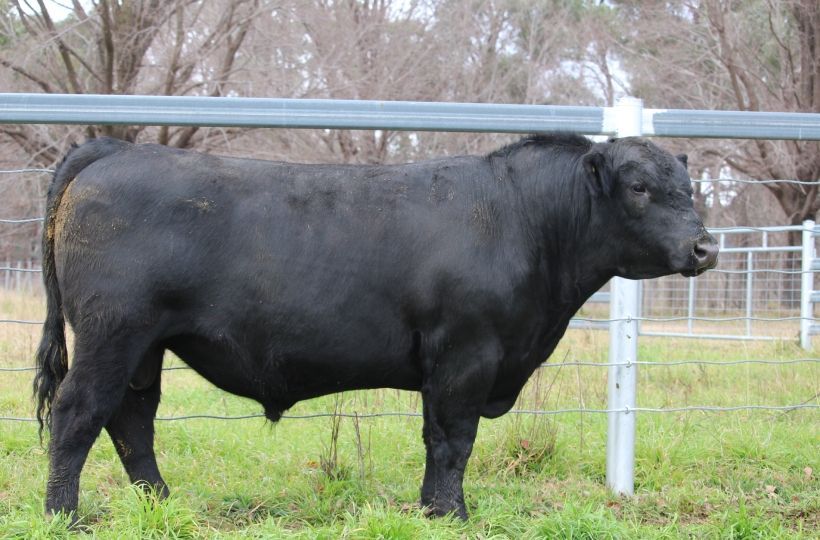
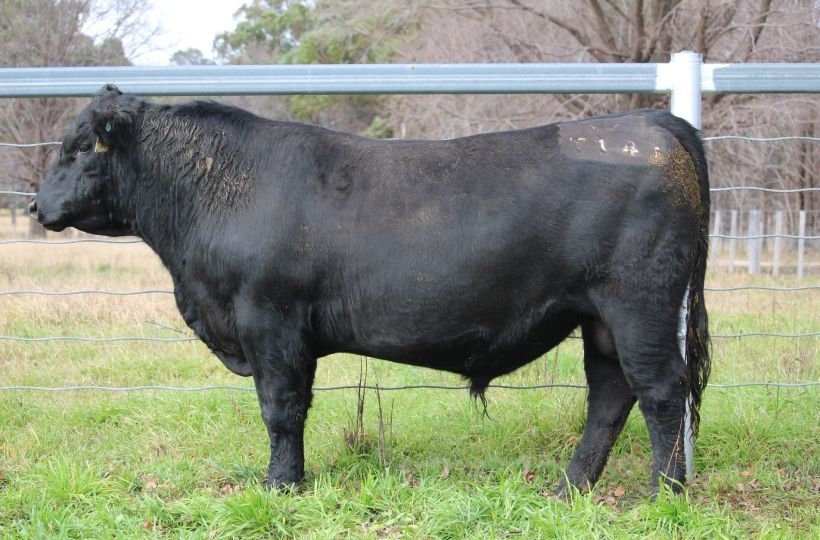
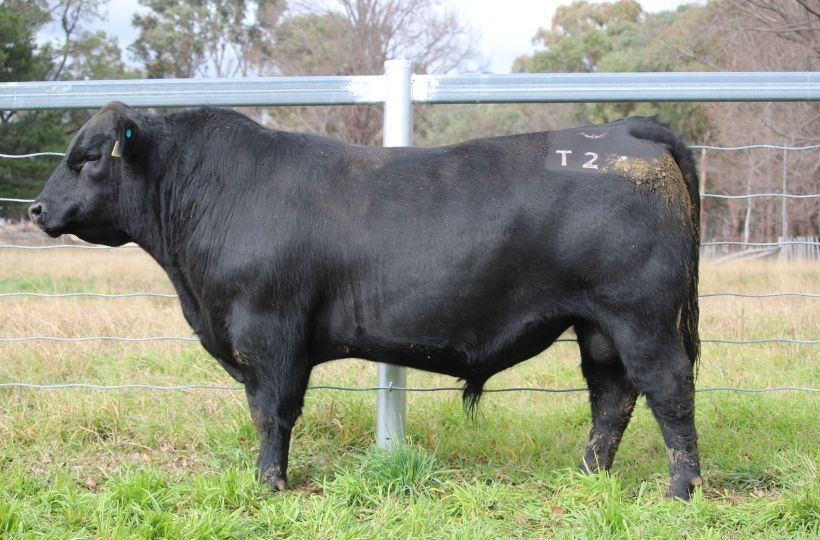
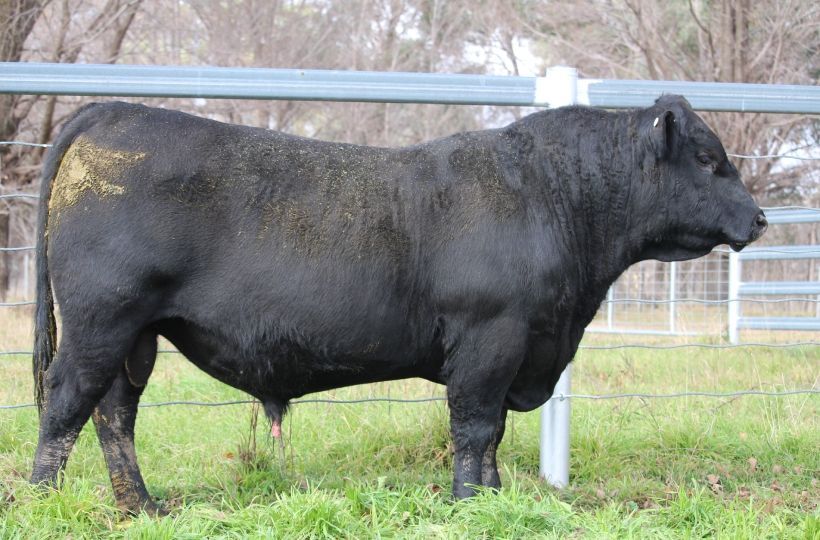
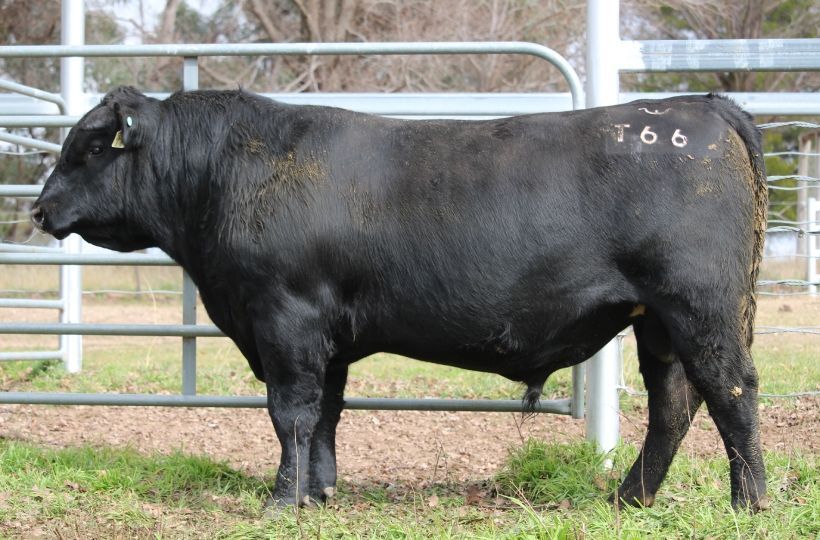
Our Bull Sale Team has not been clipped or washed for pre-sale photos nor for Sale Day. This ensures a true & more accurate representation of each bull’s natural Coat Type. It also means the variation in Coat Type between bulls is readily apparent & easy to discern.
Importantly, this better enables you to select a bull for his true natural Coat Type should this be a component of your selection criteria.
Our in-field & personal experience has been that in our environment, observable variation in Coat Type between animals in both our Stud & Commercial Angus herds is definitely apparent.
Further, Coat Type varies between seasons & can be influenced by an animals age:-
- Seasonal variation – even those animals who present as the hairiest in the mob during the depths of our Guyra Winter, will shed hair & become much slicker in their coat during the Spring & Summer months. This tendency to shed hair infers a level of ‘environmental adaptability’ which may in time, prove to be a trait of more relevance to 'heat tolerance' than Coat Type alone.
- Age variation - our 2yo heifers who birth their 1st calf in July/August can often be slower to shed their coat coming into Spring. This is probably linked to their increased nutritional requirements as they continue to not only grow themselves but also lactate & grow their 1st calves. Whereas mature, older aged cows not only present with a slicker Coat Type in general, but they will also shed their coat earlier in the Spring.
The take home message is that within any herd of Angus animals, they will exhibit variation in Coat Type, no matter the season or their age. This infers there is opportunity to make genetic selections for this trait.
To better enable buyers to select Angus bulls for their genotype for this trait, TACE presently calculate a Coat Type Research Breeding Value (RBV) - RBV’s are EBV’s in development – based on raw Coat Type scores submitted by conscientious Angus seedstock breeders.
Raw Coat Type scores range from 1, being extremely short like those in some Bos indicus, to 7; greater hair length with heavy cover extending over the neck & rump.
Lower Coat Type RBV’s indicate an Angus bull is expected to produce progeny with a shorter, slicker coat.
We are proud to be one of the select few Angus seedstock producers who does actually record & submit to TACE, raw Coat Type scores. We do this across our complete draft of bulls & heifers at the same time as 400 Day weights are submitted to TACE for these animals. For our 2026 Bull Sale Team this raw data (for all bulls & heifers) was recorded & submitted to TACE in late August 2025, prior to our Spring joining program.
Once a Coat Type EBV is available for Angus animals, buyers will be able to more reliably & accurately select Angus bulls for their genotype or genetic merit in this trait, regardless of whether they’re presented clipped or unclipped & no matter the environment in which they’ve been reared.
Which is why we think it way more important to score Coat Type in an Angus bull, not just clip him!
Finally, it is worth noting a definitive link between Coat Type & ‘heat tolerance’ in Angus cattle in Australia has NOT yet been established by formal, published scientific research. Whilst anecdotal experience may suggest that this is the case, keep in mind there is still a considerable amount of research to do to better establish the interaction between Coat Type, heat tolerance & other production traits in Angus cattle in Australia.